Saturday, September 26, 2009

living science books

In a previous post, I mentioned that for science this year (and probably throughout the elementary years) we've opted to do nature study, gardening, cooking, reading living books about science and visiting science museums.

The best index I've seen of recommended living science books was put together by the North Houston Charlotte Mason support group. If you can get past the page design (that's the web-developer in me talking) it seems to be a good source of information. NOTE: Turn down your speakers!

Simply Charlotte Mason provides a set of lesson plans entitled 106 Days of Creation that looks interesting, though it was a bit much for me this year. We might use it in later years. They list the supplemental living books to use on their science page.

My sister sent me this link to several books online about animals by Arthur Scott Bailey.

Here are some of the books about nature and science that we have enjoyed so far this year.


cooking together

In a previous post, I mentioned that for science this year
(and probably throughout the elementary years) we've opted to do nature study, gardening, cooking, reading living books about science and visiting science museums.

Most of the time I am baking something the kids help me. They love to measure, mix, cut out cookies, knead dough, etc. We get a chance to talk about how yeast works and our sourdough starter and the different tastes of salt and sugar though they look the same. We mix food colorings together to see what color will result. We experiment with adding ingredients and leaving them out.

We have a standing tradition around our house that every time it rains, we make cookies. (Since it's been raining for the past 14 days around here, we have not honored that tradition upon each occasion!) It's still fun to get to try different cookie recipes.

Each child has their own recipe book. When they help make something, I print off the recipe and they put it in their book. Often they draw a picture of the final product on the recipe page.

gardening

In a previous post, I mentioned that for science this year (and probably throughout the elementary years) we've opted to do nature study, gardening, cooking, reading living books about science and visiting science museums.

My K5-son and K3-daughter have a small garden that they are responsible for maintaining...and harvesting! We opted for no-till square-foot gardens for easy start-up and maintenance. We marked off the plot, put down layers of wet newspaper and added compost and cow manure on top. Then the kids looked through our seed stash (which we had received at a city-sponsored "Going Green" event last fall) and chose what they wished to plant. I helped them determine where each seed should be planted based on size and recommended spacing. They drew pictures on a garden plot sheet to help us remember where to plant as well as what was planted. After first planting the seeds my K5-son and K3-daughter would go out each day to see if any of the seeds had sprouted. What excitement when the first seedlings broke through the soil!

They also got a first-hand introduction to pests. My K5-son 's zucchini and pumpkin plants were decimated by the dreaded squash vine borer. We had seen those guys last year, so we knew what they were. So far, my K3-daughter's pumpkin is still growing (it's about 30 feet long now), but alas, no pumpkins. We also have had opportunity to learn about hornworms, cucumber beetles and harlequin bugs and many good insects as well.

Right now we don't have a good desk reference for garden pests, so we look of most of them up online. This year, we just let the pests eat what they wanted except for a few vine borers that we gladly dissected and the hornworms that my K3-daughter enjoyed "squishing the green blood out of." Maybe next year we can do a better job at pest control. We'll also look into better companion planting.

The kids planted their gardens that first week of school in July. With the length of our growing season it is more than enough time. Really, in the South, you can plant a garden almost any time - just research what zone you live in and know what to plant. Most of the seed packets give you the information on when to plant based on your zone.

It has truly been a fun and educational experience for us. Another plus is that my K5-son and K3-daughter have eaten more cucumbers, corn and tomatoes than they would have otherwise - because they grew and picked them.

This fall and winter we'll concentrate our gardening efforts on harvesting and storing seed from some of our plants and herbs (making our own seed packets) as well as getting our garden plots ready for next spring.

Useful gardening links:
Journey to Forever Gardening Resources
Garden Guides
Organic Gardening Magazine

(Somehow I got a free subscription to this printed magazine and it's nice with great photos. They also have a free e-newsletter that contains good articles and helpful tips.)

nature study

For science this year (and probably throughout the elementary years) we've opted to do nature study, gardening, cooking, reading living books about science and visiting science museums.

Nature study assumes actually giving them time outside to study God's world. Generally I let them go out in the mornings for a period of time, they check their gardens and find interesting bugs and birds and then when it is Table Time they have something to draw in their Nature Journals. Mostly my K5-son is the only one maintaining a Nature Journal now as he understands the concept to draw something he saw outside. My K3-daughter was often drawing spaceships and elephants climbing the crepe myrtle trees. They especially enjoy it when I give them a clipboard and they can go outside and draw while looking at their subject.

Nature study doesn't just happen in our backyard either. In fact, their observation of the God's awesome creation happens every time we go outside whether to the grocery store or church or special trips to see the buffalo at a nearby park. When possible, we also take time to encourage their exploration and ask them questions that get them thinking. Like, what is that on the buffalo's back? A bird? Why do you think a bird is riding on the buffalo's back? And we can talk to them about how God created the birds to help eat the bugs bothering the buffalo.

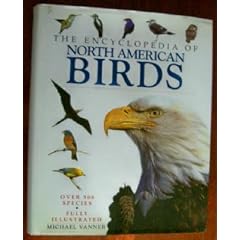
Often they ask questions for which we don't know the answers. That's when our "field guides" come in handy. So far, we have a rock/mineral identification book (though it is kind of lame) and a wonderful North American bird book that I got from a garage sale. We keep our eyes open for good, colorful reference material. Sometimes if we can't find the answer in one of our books, we'll look it up together on the internet. At this age especially, computer time is not something I usually allow. I want them to play with concrete objects and not in a cyber world. However, the internet has been helpful if we are reading about bird, for instance, to go and hear the bird's call.

The Nature Journal template that we use has space for them to record weather observations and the current date. (We mark off the days on our wall calendar and each day practice saying the entire date - Friday, September 25th, 2009). For recording the weather, we first were using some weather stickers I printed, but now I just let them draw the weather - whether sunny, rainy, cloudy, etc.

Sometimes my K5-son collects leaves and flowers that we press and then tape to the back of a Nature Journal page. We're not labeling and identifying these yet, but just using the leaves to make different shapes and pictures.

Each day a blank Nature Journal sheet goes into my K5-son's folder for the day and when he is done drawing he puts it a 3-ring binder for safe keeping.

Friday, September 25, 2009

penmanship

Around the first of this year - when my K5-son was just five - I started teaching him how to write his capital letters. Though I had planned to use the Handwriting without Tears strokes because I had heard so many good things about the program, we kind of got off-base. He developed some really bad handwriting habits and then life happened and we totally set aside any kind of handwriting practice.

Because he had already written his capital and lowercase letters a few times, I thought that when we began Kindergarten we would go straight into copywork. However, once we started the year, it was evident he needed more training in how to form the letters. So, I took the plunge and purchase the Handwriting without Tears curriculum.

He has really enjoyed doing handwriting and his penmanship has improved. We are taking things slow - only 1 or 2 letters/numbers per week. We spend about 15 minutes per day on handwriting. My K3-daughter joins us for most days and is doing well with writing letters on a slate with chalk.

At first, I thought I could teach him myself just using the free resources that Handwriting without Tears provides, but then I realized it would be so much easier just to buy the workbooks and learning aids than to recreate them myself. (Time vs. Money decision)

You can see what we bought on the 2009-2010 Cost sheet.

poetry & "living" books

What are "living" books? Simply Charlotte Mason gives a good, concise definition:

Probably the most well known of Charlotte’s methods is her use of living books instead of dry, factual textbooks. Living books are usually written by one person who has a passion for the subject and writes in conversational or narrative style. The books pull you into the subject and involve your emotions, so it’s easy to remember the events and facts. Living books make the subject “come alive.”

So we are using "living" books instead of textbooks for the subjects we are studying. Many times I'm finding you can't fit a "living" book into just one subject. Take for instance, the Little House on the Prairie series. There's science, history, math...a whole lot of good stuff in there.

In their article, Ten Things to Do with Your Child Before Age Ten, Trivium Pursuit recommends reading aloud to your children at least two hours a day. Two hours a day!? At first I was thinking, "There is no way that could happen." But, we've set up our routine where we are reading to them about that much. Early on we established reading together as a daily before-sleep ritual and that has carried over. Right now, I am reading through the Little House series before afternoon naps (or "quiet time" for those who don't take naps anymore) and Don is reading through Stuart Little before bedtime at night. Don also reads aloud to the whole family during our daily Family Worship time.

During Family Worship, everyone must sit quietly and listen - Daddy will be asking questions at the end of the reading! This is also practice for sitting still in worship service at church. During the other reading times, however, we've taken the Bluedorn's advice:

Do not require your children to sit beside you on the couch perfectly still while you read. As long as they stayed in the room and were not distracting or interrupting, we allowed our children to play quietly with their toys or to work on cross-stitching or to draw or some similar quiet project, while we read aloud.

Just a note: Art projects during "story time" usually go much better when Corban (almost 2) is already in bed for naps. I usually read simpler stories with him before his morning quiet time and afternoon nap time.

We also have time one day a week dedicated to reading poetry. This year we are focusing on the works of Robert Louis Stevenson using A Child's Garden of Verses. This is an area of our home education that I particularly enjoy. The kids seem to like it as well and enjoy figuring out the imagery in his poems. We are working on memorizing "The Swing". I think the exposure to good poetry has increased my K5-son's creativity. Generally he's a very logical thinker, but he is beginning to talk about nature and other things with more poetic descriptions. I tell them a poem is like a painting made with words.


The books we are reading aloud this year:


Thursday, September 24, 2009

weekly planning

Each Friday afternoon I get ready for the following week. So far, I like planning on a weekly basis so that I can tweak the plan based on what we accomplished the previous week.

At the beginning of the year I created a term-long Master Lesson Plans document that showed each lesson I wanted us to do in each subject. For instance, in Math, I put in each of the worksheet numbers for the Miquon Orange Book, but also added lessons in for introducing a concept (like subtraction) with time for playing with manipulatives and other games to help my K5-son grasp the concept before we went to the abstract work of reading and writing the math sentences (3-2=1).

I update the "Lesson Plans" document on Fridays to mark what we accomplished the previous week. I've taken care not to add dates to the lesson plans since I want to be flexible and go with my K5-son's flow and not force him to go with mine.

After noting our progress in the Lesson Plans document, I plan out what our goals are for the following week. I use a printed version of my Weekly Planner Template. I write the dates at the top and fill in which math lesson, history story, etc. he should do during the week . I check off each thing that we accomplish and put an X by the things we didn't do. (see completed version) On some subjects I have space for my K3-daughter, but lately I've just been letting her choose a folder game or two, letting her color a page in her shapes book or Handwriting without Tears Preschool workbook and letting her play with some math manipulative like Cuisenaire rods.

After making my Weekly Plans, I put the appropriate worksheets in my K5-son's folders. I have 5 manila folders in our file cabinet marked for each day of the week (Monday-Friday). (I got this idea from Preschoolers and Peace.) Usually we only have two worksheets in each folder - Nature Journal page and a Miquon Math sheet. My K5-son completes these during morning Table Time.

This weekly planning session usually takes me around 15-20 minutes and is working really well for us. Since his work is already organized according to day, he knows right what to get and usually gets started working without me in the room.

For archival purposes, I scan in the completed Weekly Planning sheet and save it on my computer. This will help me in subsequent years to see just how much we actually did day by day in Kindergarten and also provide proof that I am actually schooling should I ever need it legally.