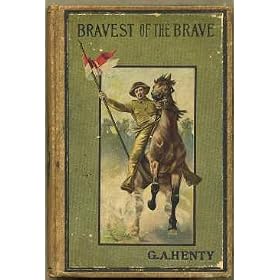
I recently listed to a seminar on homeschooling boys and the speaker recommended books by G. A. Henty as good stories showcasing manly men. These are available for free at Project Gutenberg, but also for free via Amazon for Kindle. You can download a Kindle for PC application to read them on your computer if you don't have a Kindle.
Showing posts with label literature. Show all posts
Sunday, February 14, 2010
Books by G.A. Henty
I recently listed to a seminar on homeschooling boys and the speaker recommended books by G. A. Henty as good stories showcasing manly men. These are available for free at Project Gutenberg, but also for free via Amazon for Kindle. You can download a Kindle for PC application to read them on your computer if you don't have a Kindle.
Wednesday, January 27, 2010
Timesaver: the Library
Notice, however, that when I refer to my kids and the library my writing is filled with words like "the idea" and "imagine". You see, right now, with four children five and under the library is not such an enjoyable experience. My 2-yr old son is trying to eat the fish from the aquarium. My 4-yr old daughter is being called down by the librarian for riding the turtle (it's ceramic, but it's on top of a bookshelf). My 5-yr old is busy pulling about 30 books off the shelf to take home. So, for now, those nice calm trips to the library are a figment of my imagination.
For now, I use our public library's online tools to find the balance between introducing my children to lots of great books and saving my sanity. Our library has an option to create an online account, linked to your library card, and request books be placed on hold. I believe the limit is 5 books at a time. From the comfort of my home, I search the card catalog and choose books we want to check out. I place them on "hold" and sometime within a day the librarian calls me and tells me they are ready. Usually I ask my husband to go by the library on his way home from work and pick up our books. It takes about 5 minutes for me to request them and about 5 minutes for him to walk to the check-out desk and pick them up.
Of course, one day it will be beneficial to teach the kids how to act in the library and how to use it, and I will. In the meantime, placing books on hold is a great time and sanity saver.
Friday, October 9, 2009
memorization
The Bluedorn's at Trivium Pursuit list memorization as one of the "Ten Things to do with Your Child Before the Age of Ten." We agree. We have already seen so much fruit in having our children memorize passages from the Bible - both in their lives and ours.
During Family Worship, we've been working through the book of Proverbs and memorizing passages that Daddy chooses. During morning Bible time, I am using the Truth and Grace Memory Books our church endorses as a guide. It is helpful because many times the kids are working on the same verses and catechism questions in Sunday School.
We were really moving along in the area of memorization and then something happened and we kind of got off track. I read about the Scripture Memory System explained at Simply Charlotte Mason and we're going to give that a try. We've got the index card box and the dividers, but actually making the scripture cards is still on the to-do-list.
During our weekly poetry readings, we are working on memorizing some of Robert Louis Stevenson's poems (since we are concentrating on his works this year). Right now, we are working on "The Swing". I've been mostly working with my K5-son in memorizing it, but it brought a smile to my face when I heard my K3-daughter playing alone the other day and swinging one of her dolls and quoting, "How do you like to go up in a swing? Up in the air so blue?"
Friday, September 25, 2009
poetry & "living" books
What are "living" books? Simply Charlotte Mason gives a good, concise definition:
Probably the most well known of Charlotte’s methods is her use of living books instead of dry, factual textbooks. Living books are usually written by one person who has a passion for the subject and writes in conversational or narrative style. The books pull you into the subject and involve your emotions, so it’s easy to remember the events and facts. Living books make the subject “come alive.”
So we are using "living" books instead of textbooks for the subjects we are studying. Many times I'm finding you can't fit a "living" book into just one subject. Take for instance, the Little House on the Prairie series. There's science, history, math...a whole lot of good stuff in there.
In their article, Ten Things to Do with Your Child Before Age Ten, Trivium Pursuit recommends reading aloud to your children at least two hours a day. Two hours a day!? At first I was thinking, "There is no way that could happen." But, we've set up our routine where we are reading to them about that much. Early on we established reading together as a daily before-sleep ritual and that has carried over. Right now, I am reading through the Little House series before afternoon naps (or "quiet time" for those who don't take naps anymore) and Don is reading through Stuart Little before bedtime at night. Don also reads aloud to the whole family during our daily Family Worship time.
During Family Worship, everyone must sit quietly and listen - Daddy will be asking questions at the end of the reading! This is also practice for sitting still in worship service at church. During the other reading times, however, we've taken the Bluedorn's advice:
Do not require your children to sit beside you on the couch perfectly still while you read. As long as they stayed in the room and were not distracting or interrupting, we allowed our children to play quietly with their toys or to work on cross-stitching or to draw or some similar quiet project, while we read aloud.
Just a note: Art projects during "story time" usually go much better when Corban (almost 2) is already in bed for naps. I usually read simpler stories with him before his morning quiet time and afternoon nap time.

We also have time one day a week dedicated to reading poetry. This year we are focusing on the works of Robert Louis Stevenson using A Child's Garden of Verses. This is an area of our home education that I particularly enjoy. The kids seem to like it as well and enjoy figuring out the imagery in his poems. We are working on memorizing "The Swing". I think the exposure to good poetry has increased my K5-son's creativity. Generally he's a very logical thinker, but he is beginning to talk about nature and other things with more poetic descriptions. I tell them a poem is like a painting made with words.
The books we are reading aloud this year:
Probably the most well known of Charlotte’s methods is her use of living books instead of dry, factual textbooks. Living books are usually written by one person who has a passion for the subject and writes in conversational or narrative style. The books pull you into the subject and involve your emotions, so it’s easy to remember the events and facts. Living books make the subject “come alive.”
In their article, Ten Things to Do with Your Child Before Age Ten, Trivium Pursuit recommends reading aloud to your children at least two hours a day. Two hours a day!? At first I was thinking, "There is no way that could happen." But, we've set up our routine where we are reading to them about that much. Early on we established reading together as a daily before-sleep ritual and that has carried over. Right now, I am reading through the Little House series before afternoon naps (or "quiet time" for those who don't take naps anymore) and Don is reading through Stuart Little before bedtime at night. Don also reads aloud to the whole family during our daily Family Worship time.
During Family Worship, everyone must sit quietly and listen - Daddy will be asking questions at the end of the reading! This is also practice for sitting still in worship service at church. During the other reading times, however, we've taken the Bluedorn's advice:
Do not require your children to sit beside you on the couch perfectly still while you read. As long as they stayed in the room and were not distracting or interrupting, we allowed our children to play quietly with their toys or to work on cross-stitching or to draw or some similar quiet project, while we read aloud.
Just a note: Art projects during "story time" usually go much better when Corban (almost 2) is already in bed for naps. I usually read simpler stories with him before his morning quiet time and afternoon nap time.
We also have time one day a week dedicated to reading poetry. This year we are focusing on the works of Robert Louis Stevenson using A Child's Garden of Verses. This is an area of our home education that I particularly enjoy. The kids seem to like it as well and enjoy figuring out the imagery in his poems. We are working on memorizing "The Swing". I think the exposure to good poetry has increased my K5-son's creativity. Generally he's a very logical thinker, but he is beginning to talk about nature and other things with more poetic descriptions. I tell them a poem is like a painting made with words.
The books we are reading aloud this year: